
How to Choose Baby Play Mat
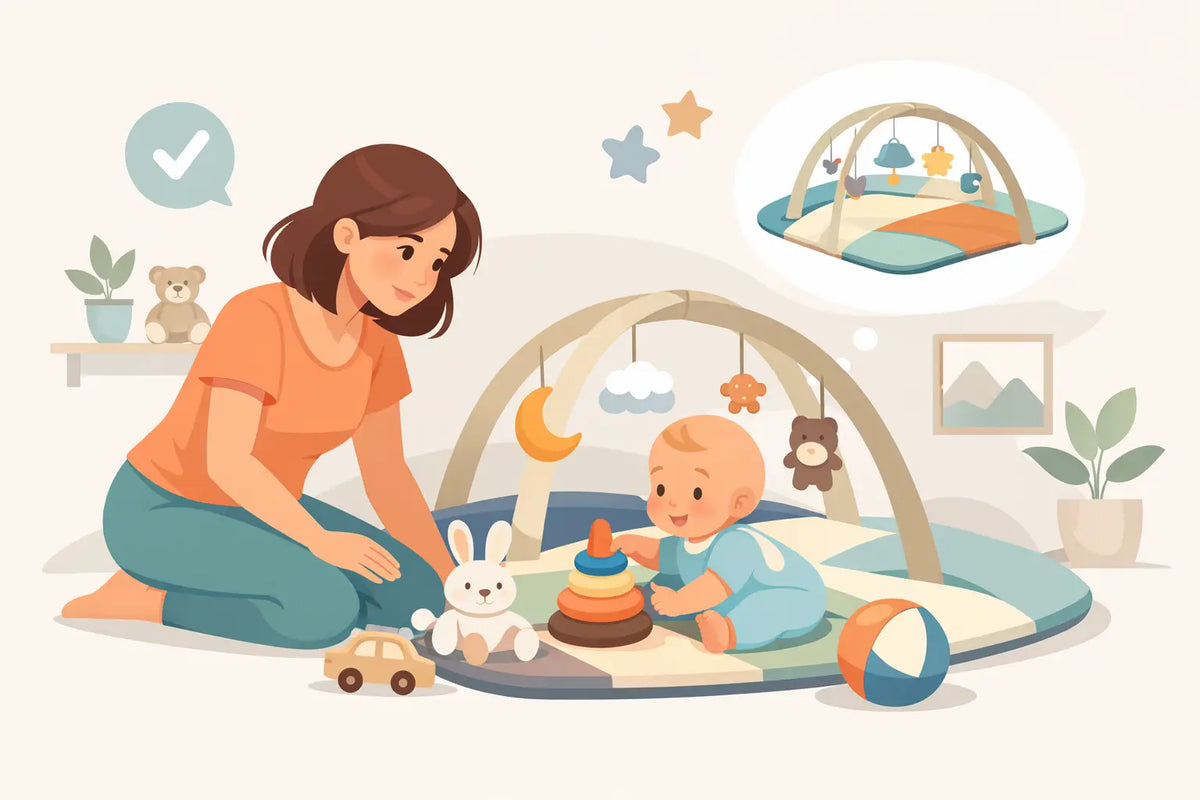
A play mat often ends up being one of the most used items in your baby’s early routine. It is where tummy time happens, where little hands begin reaching, rolling and grabbing, and where many parents spend long stretches of the day sitting close by. If you are wondering how to choose baby play mat options without overthinking every detail, it helps to focus on what will feel safe, comfortable and genuinely useful in your home.
The right mat is not always the biggest, softest or most expensive one. For some families, easy cleaning matters most. For others, foldability, style or extra cushioning will be the deciding factor. A thoughtful choice comes down to your baby’s stage, your available space and how you want this everyday essential to fit into family life.
How to Choose Baby Play Mat for Your Space
Before looking at colours, toys or added features, think about where the mat will actually go. A large padded mat may look lovely in a nursery, but if most of your day happens in the lounge, it needs to work there too. Likewise, if you live in a smaller flat or prefer to tidy everything away at the end of the day, a bulky mat can quickly become inconvenient.
Measure the floor space you are happy to give over to baby play. Leave room for your baby to stretch, roll and eventually crawl, but also consider your normal routine. You should be able to move around it easily without feeling as though the room has been taken over. For many parents, a medium-sized play mat offers the best balance between comfort and practicality.
If you plan to move the mat between rooms, choose one that folds simply or is light enough to carry without fuss. That small detail can make everyday use much easier, especially when you are juggling feeding, nappy changes and nap times.
Safety Comes First
A baby play mat should create a soft, secure place for supervised play, but it is not a substitute for safe flooring or close adult attention. The surface should lie flat without curling edges, gaps or raised seams that could become a trip hazard for older babies or adults nearby.
Look closely at the construction. A mat that slides too easily on wood or laminate flooring can be frustrating and less secure, so some grip underneath is helpful. If your baby will be using the mat from the newborn stage, a stable and well-finished surface matters more than decorative extras.
Material choice also plays a part in safety. You want something made for baby use, with a finish that feels gentle against delicate skin. Many parents prefer mats that are free from harsh chemicals and strong odours. If a mat has a noticeable smell when opened, allow it to air out fully before use.
Cushioning and Comfort Matter More Than You Think
Babies spend a surprising amount of time on the floor in those first months. During tummy time, they are learning to lift their head, push through their arms and take in the world from a new angle. A mat that is too thin can feel uncomfortable quite quickly, especially on harder floors.
That does not mean you need the thickest option possible. Very soft padding can sometimes make movement less stable as your baby grows and starts to roll or sit. A good play mat usually has enough cushioning to soften the floor while still giving proper support underneath.
This is especially worth thinking about in UK homes with timber, tile or laminate flooring, which can feel colder and less forgiving than carpet. If your home tends to run cool, a padded mat can help make floor play more inviting for both baby and parent.
Choosing Materials That Suit Daily Life
When deciding how to choose baby play mat designs, material is one of the biggest factors. Fabric mats often feel cosy and soft, which many parents love for young babies. They can be particularly nice for quiet play, stretching out, or early sensory time. The trade-off is that fabric tends to absorb dribbles, milk spills and the everyday mess that comes with baby life.
Foam or wipe-clean mats are often easier for busy households. They suit frequent use, can be cleaned quickly and are practical once your baby starts weaning, crawling and bringing everything to their mouth. Some parents find them less cosy than quilted fabric, but the convenience is hard to ignore.
There is no single right answer here. If your priority is a soft, snug feel in the newborn months, fabric may suit you best. If you want one mat to carry you through several stages with less washing and drying, a wipeable option can be a very sensible choice.
Think About Your Baby’s Age and Stage
A newborn does not need the same kind of mat as an active older baby. In the early weeks, comfort and a calm space matter most. You may prefer a mat with gentle textures or an attached play gym to encourage reaching and visual engagement.
By the time your baby is rolling, pivoting and beginning to crawl, floor coverage becomes more important. You will want enough room for movement, plus a surface that stands up well to repeated use. At this stage, many parents start valuing durability and ease of cleaning even more.
For toddlers, a play mat often becomes part of a broader play area rather than a dedicated baby zone. That means it should still feel comfortable but also practical enough for books, toys and everyday activity. If you are hoping to get longer use from your purchase, choose a style that can grow with your child rather than one that only suits the newborn stage.
Easy Cleaning Is Not a Small Detail
Baby products are often bought with the sweetest moments in mind, but daily use tells the real story. A play mat will see dribble, spit-up, snack crumbs, nappy leaks, mushed fruit and all sorts of small accidents. If it is difficult to clean, it may end up being used less often than you expected.
Check the care instructions before you buy. Some mats can be wiped down in seconds, while others need spot cleaning or a full machine wash. Neither is automatically better, but the right choice depends on your routine. If you know you want something simple and low-effort, choose a surface that can be refreshed quickly between uses.
It is also worth considering drying time. A mat that takes ages to dry may not be ideal if you rely on it every day.
Style Has a Place Too
Parents should not feel guilty for wanting baby essentials to look nice at home. If a play mat is going to live in your main family space, its design matters. Soft, timeless colours and simple patterns can help it feel like part of the room rather than visual clutter.
That said, appearance should come after function. A beautiful mat that marks easily, slips on the floor or lacks enough support will not feel like a good buy for long. The sweet spot is something that feels thoughtful and attractive while still doing the practical job well.
A carefully chosen play mat can make the room feel calmer too. For many families, that matters more than bright prints or overly busy designs.
Useful Features and What You Can Skip
Some baby play mats come with arches, hanging toys, mirrors, crinkle textures or removable sections. These can be lovely, especially if you want a ready-made activity space. They can encourage reaching, kicking and visual development in the early months.
Still, not every extra is worth paying for. If the toys look flimsy or the mat itself seems less sturdy because of them, it may be better to choose a simpler, better-made base. You can always add your own favourite toys later.
In many cases, the most valuable features are the least flashy ones - decent padding, a wipe-clean finish, easy storage and enough size for your baby to move freely.
A Simple Way to Narrow It Down
If the options all start to blur together, come back to three questions. Where will the mat be used most? What kind of cleaning realistically suits your week? And do you want it mainly for the newborn months or for longer-term play?
Those answers usually make the choice clearer quite quickly. A thoughtfully curated baby essential should make daily life easier, not give you another decision to second-guess. That is why many parents prefer products that feel dependable, comfortable and simple to live with.
At Dherry's Online Store, that same thinking sits behind what families look for most - practical pieces that support your little one while fitting naturally into real home routines.
A baby play mat does not need to do everything. It just needs to give your child a safe, comfortable place to play and give you one less thing to worry about as the days fill up.


Leave a comment
This site is protected by hCaptcha and the hCaptcha Privacy Policy and Terms of Service apply.