
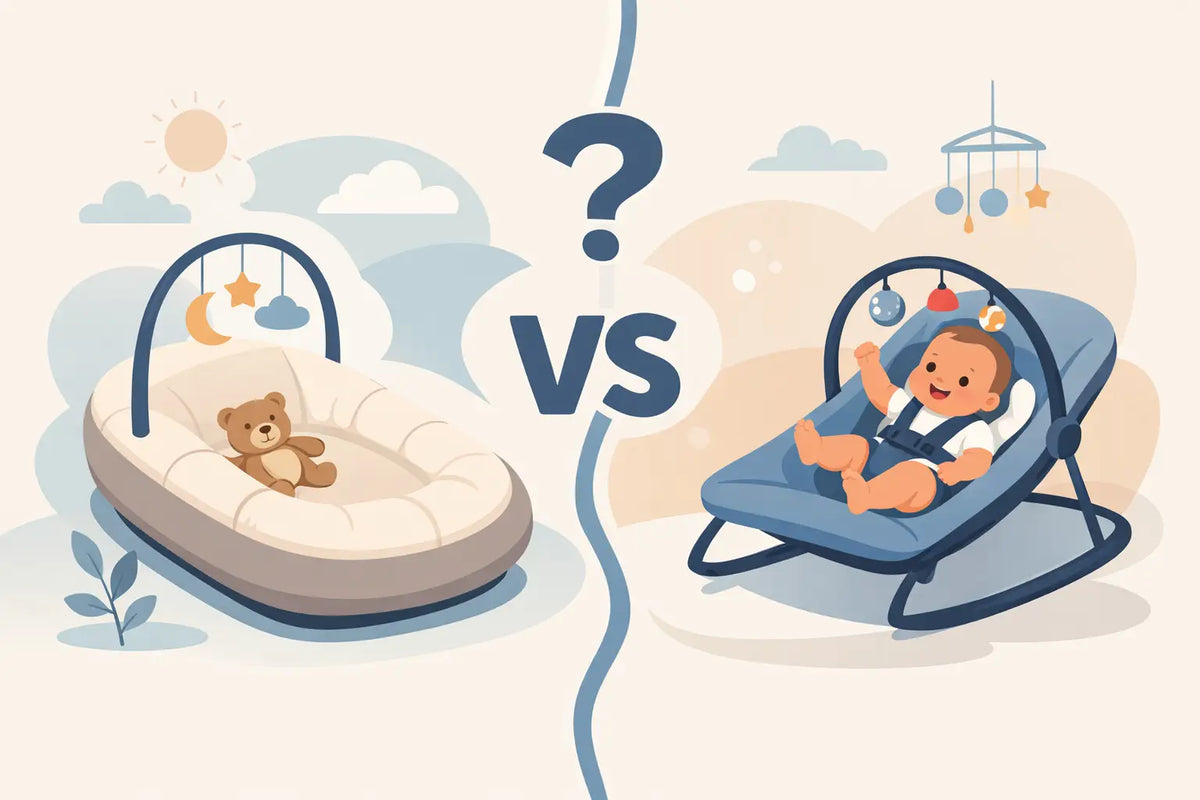
Baby Lounger vs Bouncer: Which to Choose?
You notice it quickly when preparing for a new baby - two products can look equally useful, yet serve very different purposes. When it comes to baby lounger vs bouncer, many parents are really asking a more practical question: where will my baby be comfortable, settled and safely supported during the day?
The answer depends on your routine, your baby’s age and how you plan to use it. A lounger and a bouncer are not interchangeable, even if they often appear side by side while shopping. One is designed more as a soft, supervised place to lay baby down for short periods, while the other adds movement and a more structured seat. Knowing that difference can make everyday routines feel much simpler.
Baby lounger vs bouncer: the core difference
A baby lounger is usually a cushioned, nest-like surface designed for supervised rest time when your little one is awake. It tends to sit flat or close to flat and creates a soft, cosy spot for brief moments such as nappy changes, play beside you on the sofa or floor, or keeping baby nearby while you fold washing or enjoy a cup of tea.
A baby bouncer, by contrast, is a supportive seat with an angled frame. It is made to hold your baby in a reclined position and often responds to natural movement, gentle bouncing or soothing vibration, depending on the design. Many parents find a bouncer especially helpful when they need free hands for a few minutes but still want baby close and content.
That distinction matters because each product fits a different kind of moment. A lounger is more about comfort and closeness. A bouncer is more about supported seating and gentle stimulation.
When a baby lounger makes sense
A baby lounger can feel like a very comforting addition in the early weeks, particularly for parents who want a dedicated place to set baby down while staying nearby. It gives structure to the day without feeling bulky, and it often suits homes where portability matters.
If you move between rooms often, a lounger is usually lighter and easier to carry than a bouncer. You can place it in the living room during the morning, bring it into the nursery later, and keep your little one beside you in a familiar spot. For many mums, that convenience is part of the appeal.
It can also be useful for short periods of awake time when baby is calm and observant. Some babies enjoy simply lying back and watching the world around them. In those quieter windows, a lounger can feel soft, cosy and reassuring.
That said, a lounger has limits. It does not provide the same upright support as a bouncer, and it should never be treated as a sleep solution unless the product is specifically designed and safety-tested for that use. Parents sometimes buy loungers expecting them to do everything, but they are best thought of as one small part of a wider daily setup.
When a baby bouncer is the better fit
A bouncer often earns its place when a baby wants more interaction or settles better with movement. The gentle rocking effect can be soothing, especially during fussy periods when lying flat feels less engaging.
For many families, the biggest advantage is practical. A bouncer can give you a short, useful window to shower, prepare lunch or help an older sibling, while your baby remains securely supported in the same room. That hands-free element is often why parents come back to the bouncer again and again.
Bouncers also tend to offer more defined seating support. That can make them feel especially helpful once your baby becomes more alert and enjoys looking around. Toys, soft bars and movement features can add a little extra interest too, though simple is often enough.
The trade-off is that bouncers are usually less compact than loungers, and not every baby enjoys them immediately. Some love the snug, elevated feel. Others prefer flatter surfaces or need time to adjust. A bouncer is useful, but not universally adored by every baby.
Safety matters more than convenience
This is where the baby lounger vs bouncer conversation becomes more important than style or price. Whichever option you choose, safety guidance should shape how you use it.
A lounger should only be used for supervised awake time unless it is explicitly approved for safe sleep in line with current guidance. Soft, padded products can be appealing because they look comfortable, but comfort and sleep safety are not the same thing. If your baby falls asleep in a place not intended for routine sleep, it is best to move them to a safe sleep space as soon as possible.
A bouncer also needs careful use. Because it places baby in a reclined seat, it should be used according to the manufacturer’s age and weight guidance, with the harness fitted properly where required. It is not a substitute for a cot, Moses basket or other approved sleep space. Nor should it be placed on raised surfaces such as tables or worktops.
In simple terms, both products can be very useful. Neither replaces a safe sleep setup.
Baby lounger vs bouncer for newborns
For newborns, the right choice often comes down to what kind of support you need at home. If your days are built around feeding, cuddles and keeping baby close as you move gently from room to room, a lounger may feel like the softer and simpler option.
If you know you would value a secure seat while making breakfast, answering the door or sitting with an older child, a bouncer may be more immediately practical. The upright angle and movement can help some newborns stay settled while still feeling involved in family life.
Still, newborn preferences are wonderfully unpredictable. Some babies love motion from the start, while others seem happiest on a flat surface with very little stimulation. If you are choosing just one, think less about what looks nicest and more about which product fits your real day.
What works best as baby grows?
As babies become more alert, many families find a bouncer offers longer usefulness. A growing baby may enjoy the movement, toys and elevated view more than a static lounger. That can make a bouncer feel like better value over time, particularly in the first several months.
A lounger may have a shorter useful window depending on its size and design. Once your baby starts rolling or becoming much more active, it may no longer suit the way they move. That does not make it a poor purchase, but it does mean it serves a more limited stage.
If longevity matters most to you, a bouncer often has the edge. If softness, portability and a cosy feel are the priority, a lounger may still be the better fit for your early routine.
Which is easier for everyday routines?
Parents rarely choose between products in theory. They choose based on those small daily moments that make life feel manageable or chaotic.
A lounger is often easier to move, store and bring into whatever room you are using. It can suit smaller homes, quick transitions and parents who prefer a simpler setup without frames, batteries or extra features.
A bouncer tends to be better for short periods when you truly need a supportive place to pop baby down. It feels more purposeful in those moments. You are less likely to wonder whether baby is positioned well, because the seat is built for exactly that kind of use.
So if your priority is flexibility around the house, a lounger may win. If your priority is secure, supported placement for short bursts of hands-free time, a bouncer often proves more useful.
Should you buy both?
For some families, yes. They serve different enough purposes that having both can make daily life easier. A lounger can work well for calm, supervised daytime moments, while a bouncer can help when baby wants movement or you need a little more structure.
But buying both is not essential. If you are trying to keep things streamlined, choose the one that fits your lifestyle best. Parents who prefer minimal baby gear often do well with one thoughtfully chosen option rather than several items used only now and then.
At Dherry’s Online Store, that idea of thoughtful choice matters. Parents do not need more clutter. They need well-chosen essentials that genuinely support comfort, convenience and confidence.
How to decide with confidence
If your baby lounger vs bouncer decision still feels unclear, ask yourself three simple questions. Do I want a soft place to lay baby nearby? Do I need a secure seat for short hands-free moments? Am I shopping for the newborn stage, or for a product that may stay useful a little longer?
Your answers will usually point you in the right direction. Neither option is universally better. The best one is the one that suits your baby, your home and the rhythm of your day.
A well-chosen baby essential should bring a little more calm to your routine. If that choice helps you keep your little one close, comfortable and content while making everyday life feel more manageable, it is already doing something meaningful.


Leave a comment
This site is protected by hCaptcha and the hCaptcha Privacy Policy and Terms of Service apply.