
Baby Weaning Essentials Guide for Easy Starts
The first time your baby smears yoghurt into their eyebrows, drops a spoon with great purpose, and looks genuinely pleased with the result, weaning suddenly feels very real. A good baby weaning essentials guide is not about buying everything at once. It is about choosing a few thoughtful basics that make daily feeding feel calmer, cleaner, and far less overwhelming.
For most families, weaning starts at around six months, but the pace rarely looks the same from one baby to another. Some little ones take to finger foods quickly, while others prefer smoother textures for a while. That is why the most useful essentials are the ones that support flexibility, comfort, and a more relaxed routine for both baby and parent.
What you really need from a baby weaning essentials guide
When you first start looking at feeding products, it can seem as though every meal requires a new gadget. In reality, a smaller, well-chosen set of weaning basics often works better. The aim is simple - help your baby explore food safely, support their growing independence, and make tidying up manageable enough that you do it all again tomorrow.
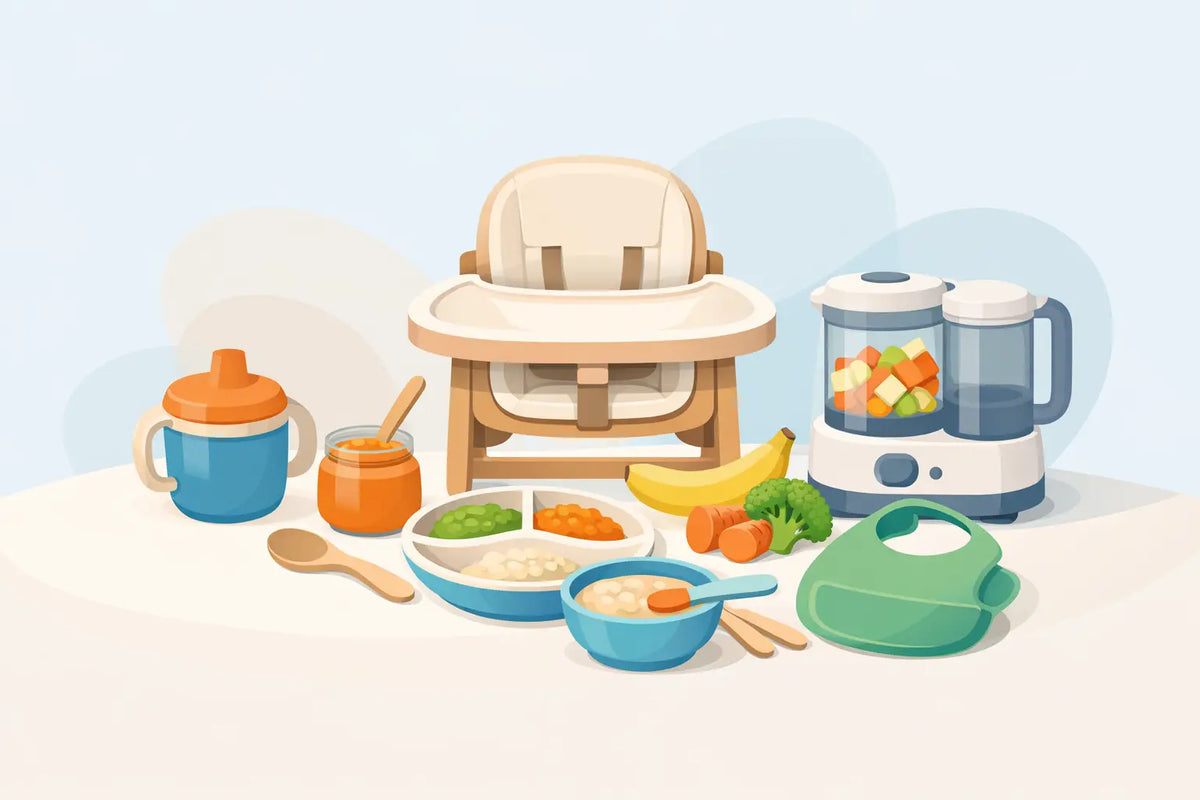
A practical setup usually begins with where your baby sits. A stable highchair with proper support matters more than decorative extras. Look for one that keeps your baby upright, with a secure harness and a footrest if possible. Good posture can make self-feeding easier and may help your baby feel more settled during meals. Easy-clean surfaces are just as valuable as comfort, because weaning is messy by nature and a chair that wipes down quickly can save your patience at the end of the day.
Just as important is what goes underneath your baby. Some parents prefer a splash mat under the highchair, especially if meals happen on carpet or near rugs. Others are happy to wipe the floor afterwards. It depends on your space and how much washing you are willing to take on. The best choice is the one that keeps your routine realistic.
Feeding essentials that earn their place
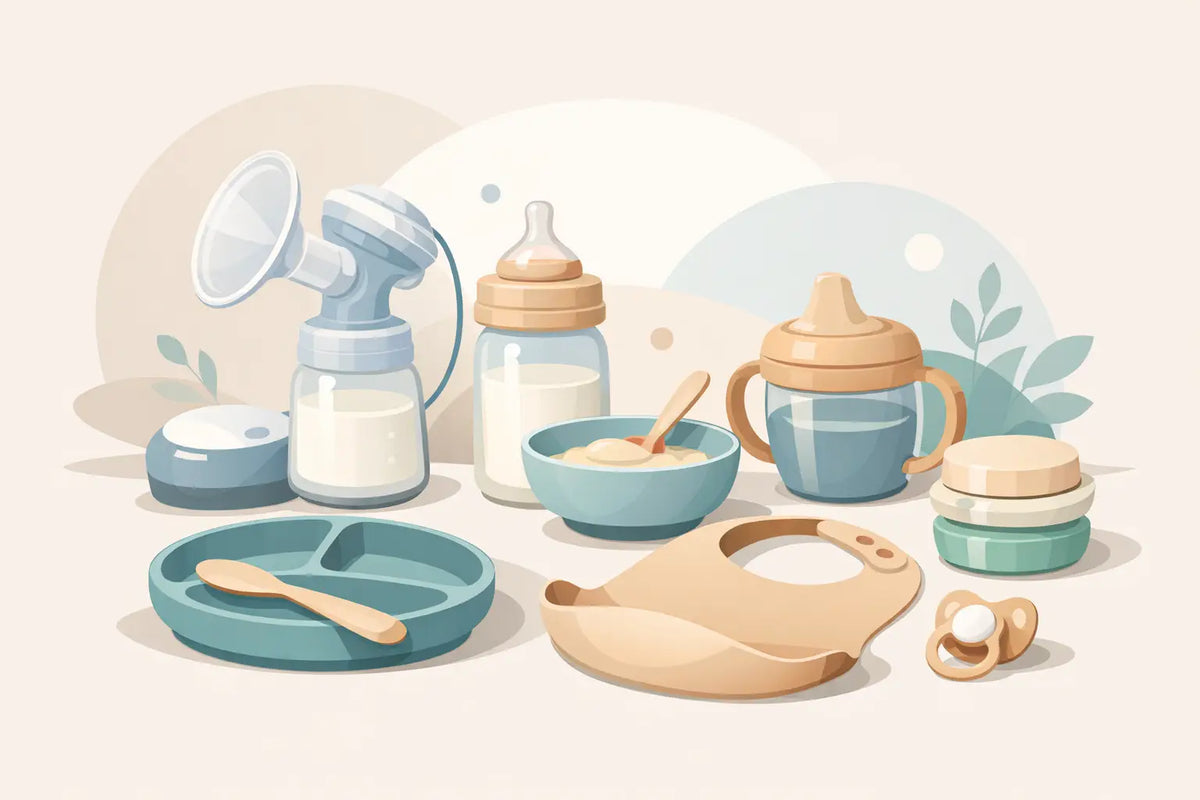
The most helpful feeding accessories are the ones you reach for every day. A soft, easy-fastening bib is high on that list. If your baby is very enthusiastic with food, a full-cover bib can protect clothing more effectively than a smaller dribble bib. Silicone catch-all bibs can also be useful, especially once your baby starts dropping more than they eat, but some babies dislike the stiffer feel. Comfort matters, so it can take a little trial and error.
Bowls and plates with suction bases are another favourite for a reason. They can reduce the dramatic plate flip that so many babies seem determined to perfect. They are not foolproof, and some babies still manage to peel them off, but they often make early mealtimes less chaotic. A divided plate can be helpful if you like to offer separate foods, though a simple bowl is often enough in the early stages.
Spoons deserve more thought than they usually get. A shallow, soft-tipped spoon tends to work well for first tastes because it is gentle on tender gums and easier for small mouths to manage. If you are combining spoon-feeding with finger foods, pre-loading a spoon for your baby can be a useful bridge between the two. It supports independence without expecting too much too soon.
Open cups and small training cups are also worth introducing early. Many parents are surprised to learn that babies can start practising with an open cup from the beginning of weaning, with help. It will be messy, but that does not mean it is going badly. A small cup that is easy to hold and not too heavy can make the learning process simpler.
Baby weaning essentials guide for different feeding styles
One reason weaning can feel confusing is that advice often sounds more rigid than real life. Some families prefer traditional spoon-feeding with purees, some go straight into baby-led weaning, and many do a blend of both. Most essentials work across all three approaches.
If you are starting with smoother foods, small bowls, soft spoons, bibs, and easy-clean wipes become your everyday basics. Storage pots can help if you like preparing food in batches. They are especially useful for busy households where getting ahead by even one meal can make the week feel easier.
If you are leaning towards baby-led weaning, your essentials may centre more on the highchair, bibs with good coverage, suction plates, and cups. You may not use spoons as much at first, but they still become handy for yoghurt, porridge, and softer meals later on.
A blended approach often suits families best because it leaves room for your baby to show you what works. Some babies love toast fingers but refuse mashed avocado unless it is on a spoon. Others are the opposite. Weaning is rarely neat or linear, so flexible essentials tend to offer the best value.
The often-forgotten essentials that make life easier
Not every weaning essential sits on the tray. Some of the most useful items support the routine around the meal rather than the food itself. Muslin cloths, soft washcloths, and gentle wipes are part of daily feeding for many months. Having enough on hand means you are not constantly searching for something clean while your baby rubs banana into the highchair straps.
A few well-fitting containers for leftovers can also make a real difference. Weaning portions are small and unpredictable, so food storage quickly becomes part of the rhythm. If you batch-cook or want to keep prepared fruit, vegetables, or porridge in the fridge, practical containers help reduce waste and save time.
Then there is clothing. Some parents keep one or two easy-change outfits specifically for mealtimes, especially in the early weeks. Soft, comfortable babywear that can cope with frequent washing is not glamorous, but it is undeniably useful. The more straightforward you make clean-up and changes, the more sustainable weaning feels.
Safety and comfort matter more than trends
A polished feeding setup can look lovely, but safety should always lead the decision. Any product you use for weaning should feel stable, easy to clean, and appropriate for your baby's stage. Check that feeding items are designed for infant use, and watch for wear and tear if they are used daily. Cracks, loose seals, or damaged surfaces are worth replacing.
Supervision during meals is essential, whatever feeding method you choose. Babies should be seated upright and never left alone with food. It also helps to stay close enough to observe how your baby manages different textures. That confidence grows with experience, and so does yours.
Comfort is part of safety too. A bib that rubs, a spoon that is too large, or a highchair that leaves your baby slumped can turn mealtimes into more of a struggle than they need to be. If something repeatedly feels awkward, it may not be the right fit for your routine.
How to choose weaning essentials without overbuying
The easiest way to avoid overbuying is to think in phases. Start with the core items you are likely to use immediately: a supportive highchair, bibs, a spoon, a bowl or plate, and a cup. Add extras once you see how your baby likes to eat.
This approach is often kinder to your budget and your kitchen cupboards. It also means the items you choose are more likely to be genuinely useful rather than simply recommended online. A carefully curated set of feeding basics usually supports family life better than a large collection of products that all promise to do the same job.
For many parents, the sweet spot is products that feel practical enough for every day but still pleasant to have around the home. Soft colours, quality materials, and thoughtful design do matter when they are paired with convenience. At Dherry's Online Store, that balance is part of what makes everyday parenting essentials feel easier to trust.
When your essentials need to change
Weaning does not stay the same for long. What works at six months may feel less useful by nine or ten months, when your baby wants to grab everything independently and may eat larger, more varied meals. That is normal.
As your little one grows, you may find yourself using sectioned plates more often, needing larger bibs, or preferring sturdier cups. Some families start with purees and later add more finger-food-friendly accessories. Others barely use bowls at first but rely on them heavily once breakfasts and snacks become part of the routine.
It helps to think of weaning essentials as a small toolkit that evolves with your child, rather than a one-off checklist to complete. The goal is not perfection at every stage. It is simply to create a feeding routine that feels safe, manageable, and supportive of your baby's development.
If you are at the beginning, keep it simple and trust the basics. A comfortable seat, a few dependable feeding pieces, and products that make clean-up easier will carry you further than a cupboard full of complicated extras. Your baby does not need a perfect mealtime setup. They need space to learn, and you need essentials that help you meet them there with a little more ease.

Leave a comment
This site is protected by hCaptcha and the hCaptcha Privacy Policy and Terms of Service apply.