
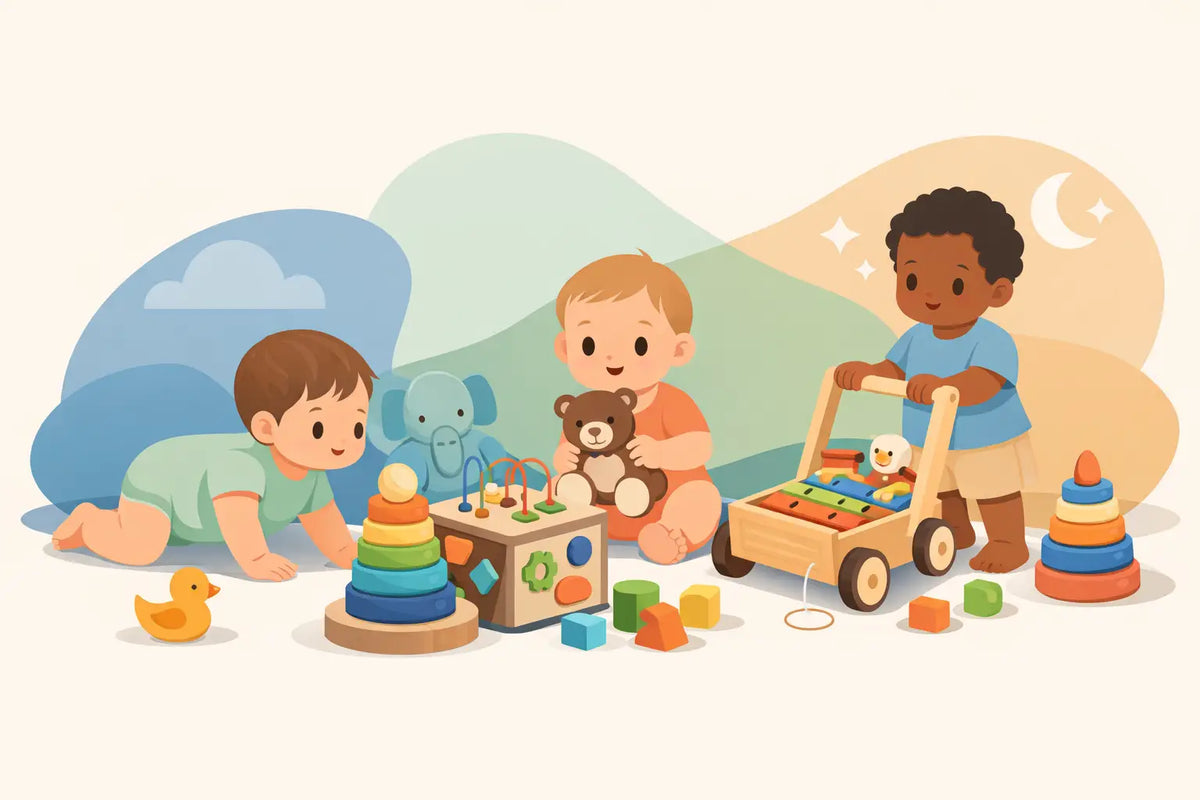
Baby Milestone Toys by Age Made Simple
One week your baby is happily staring at the light through the window, and the next they are grabbing your hair, rolling across the mat, or crawling straight for the dog bowl. That is why choosing baby milestone toys by age can feel helpful rather than fussy. The right toy at the right stage can make play more meaningful, support natural development, and give you one less thing to second-guess.
The key is not buying more. It is choosing thoughtfully. Babies do not need an overflowing toy basket to learn well. They need a small number of safe, well-made toys that match what their body and brain are ready to practise.
Why baby milestone toys by age matter
A toy that is perfect at six months may be ignored at six weeks. That does not mean anything is wrong with your baby or the toy. It simply means development happens in stages, and play works best when it meets your little one where they are.
Age guides can be reassuring, but they are still guides. Some babies roll early and sit later. Some are chatty before they crawl. Others want to mouth everything long before they show interest in buttons, textures, or stacking. The best approach is to use age as a starting point, then watch what captures your baby’s attention.
When you choose milestone toys with this in mind, you are looking for support in a few core areas - sensory discovery, hand-eye coordination, tummy time, cause and effect, movement, and early problem-solving. Comfort matters too. A toy can be beautifully designed, but if it is awkward to hold, too noisy, or overstimulating, it may not become part of your daily routine.
Newborn to 3 months
In the early weeks, play is gentle and close. Your baby is adjusting to a very busy world, so simple toys usually work best. High-contrast cards or soft books can hold their gaze because newborn vision is still developing. Black-and-white patterns, simple faces, and bold shapes are often more engaging than pastel details at this stage.
Soft rattles, lightweight fabric toys, and sensory cloths can also be lovely choices. Your baby is not yet playing in the way an older infant does, but they are learning through looking, listening, and feeling. A toy with a quiet sound or different textures can support this without overwhelming them.
A play gym can be helpful here too, especially for short stretches of floor time. The best ones encourage reaching and looking rather than flooding baby with flashing lights and constant noise. In the newborn stage, calm and comfort often go further than novelty.
3 to 6 months
This is often when babies begin reaching with purpose. They swipe, grab, kick, and bring everything to their mouth. Toys that are easy to hold become far more useful now, especially soft rattles, teething toys, textured balls, and crinkle toys.
Tummy time becomes more active during these months, so mirrors and mat toys can support head control and upper body strength. A baby-safe mirror is especially useful because babies are naturally drawn to faces, even their own reflection. It turns tummy time into something more engaging, which can make those daily sessions easier.
This is also a good stage for simple sensory toys with different fabrics, tags, ridges, and shapes. You do not need complicated features. In fact, one thoughtful toy that encourages grasping and mouthing can be more useful than several noisy gadgets.
6 to 9 months
Once sitting begins, play changes quickly. Babies can use both hands more confidently, pass toys from one hand to the other, and explore objects with more focus. This is a lovely time for stacking cups, soft blocks, sensory balls, and simple cause-and-effect toys.
A ring stacker can work well now, though some babies will only enjoy taking it apart rather than stacking it properly. That still counts as useful play. Dropping, banging, mouthing, and turning a toy over are all part of learning.
Teething often peaks around this stage too, so comfort-led toys still matter. Many parents find it helpful to have a small rotation - something for chewing, something for floor play, and something for sitting play. That keeps things practical and stops the toy basket from becoming cluttered.
9 to 12 months
This stage often brings more movement, more curiosity, and more determination. Your baby may be crawling, pulling up, cruising, or trying to open every cupboard in sight. Toys that support problem-solving and movement become more relevant here.
Activity cubes, shape sorters, nesting toys, and pop-up toys can all be good options, as long as they are age-appropriate and not too frustrating. There is a balance to strike. A toy should offer a little challenge, but it should not leave your baby cross every time they use it.
Balls are a simple favourite at this age as well. Rolling, chasing, and passing a soft ball can encourage coordination and movement without much setup. Board books with touch-and-feel elements are also useful, especially as babies begin connecting words with pictures and routines.
Baby milestone toys by age from 12 to 18 months
Around the first birthday, many babies move from mainly exploring objects to using them with more intention. They want to press, fill, empty, stack, carry, and imitate what you do. That is when push toys, simple musical toys, first puzzles, and posting toys often come into their own.
If your child is walking or close to it, a sturdy push toy can support confidence. If they are not walking yet, that does not mean you need to rush out and buy one. This is one of those moments where it depends on your child’s stage rather than the age on the box.
Pretend play starts to appear in small ways too. A toy phone, soft doll, toy cup, or little tea set may begin to make sense now because toddlers love copying the everyday world around them. These toys do not just entertain. They support communication, memory, and social understanding.
18 to 24 months
Toddlers in this age range are busy, opinionated, and wonderfully hands-on. They usually enjoy toys that let them do something rather than simply watch something happen. Stacking toys, shape sorters, chunky puzzles, ride-on toys, and early pretend play sets are all strong choices.
This is also a great age for toys that support language. Picture books, animal figures, dolls, and everyday object sets can all encourage naming, copying, and imaginative play. You might notice your toddler repeating routines they know well - feeding a teddy, brushing a doll’s hair, or putting toys to bed. That repetition is meaningful. It helps them process their world.
Open-ended toys really earn their place here. Blocks, cups, and figures can be used in different ways across many months, which makes them a practical choice for families who prefer fewer, better things.
What to look for when choosing milestone toys
Safety comes first, always. Check age guidance, avoid loose parts, and choose toys made from baby-safe materials that are easy to wipe clean. This matters even more during teething phases, when everything ends up in your baby’s mouth.
After that, think about ease and usefulness. Can your baby hold it comfortably? Will it fit into your routine? Does it support the stage they are in now, with a little room to grow? Thoughtfully chosen toys tend to be the ones that stay in regular use.
It is also worth thinking about overstimulation. Some babies love lights and music. Others become unsettled by them quickly. A quieter toy is not a lesser toy. For many families, especially during long days at home, calmer play options feel easier to live with.
At Dherry's Online Store, this kind of curation matters. Parents often do not need endless choice. They need dependable, child-centred essentials that feel comforting, practical, and genuinely worth bringing into the home.
A gentle note on milestones and comparison
It is very easy to look at age labels and start measuring your child against them. Try not to. Milestone toys are there to support development, not test it. If your ten-month-old prefers banging blocks to sorting shapes, that is still learning. If your fourteen-month-old ignores the walker and heads straight for a basket of soft books, that is useful too.
The best toy is often the one your child returns to with confidence and curiosity. Sometimes that is a beautifully made sensory toy. Sometimes it is a stack of cups used every day for six months. Sometimes it is a board book that has been read so often you know it by heart.
Choose with care, keep it simple, and trust what you are seeing in your own child. When a toy matches the moment they are in, play feels easier, development feels more natural, and everyday life with your little one becomes that bit more joyful.

Leave a comment
This site is protected by hCaptcha and the hCaptcha Privacy Policy and Terms of Service apply.